Context
Dandy set a company-level objective to introduce live visual interactions between clinicians and lab experts for the first time.
As Lead Designer, I worked across product and engineering to take the concept from pilot to scale, defining how clinicians review and collaborate on designs in real time.
The vision
The vision was to scale live design reviews from zero to thousands of sessions per week, creating a differentiated experience that brought the small lab feel of 1:1 design expert support into the big-lab world.
Challenges
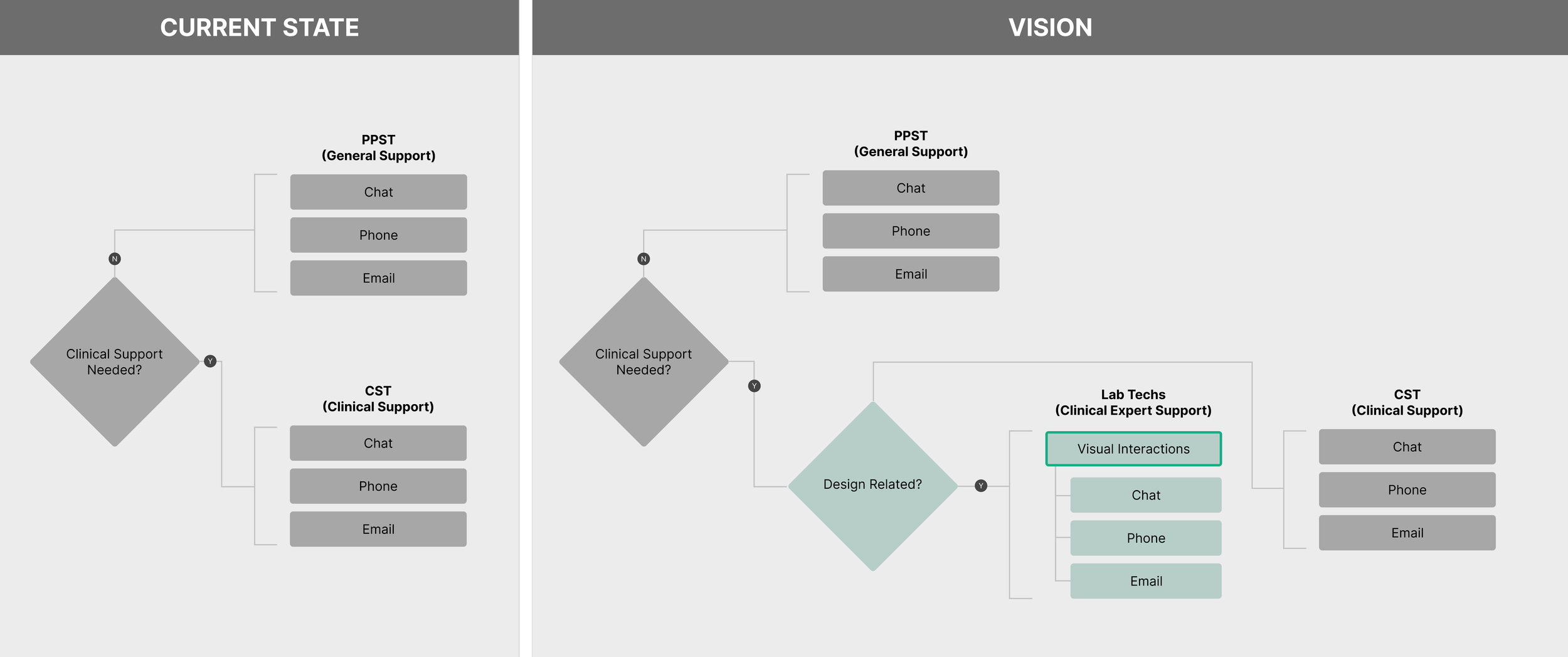
No existing infrastructure: Live visual collaboration didn’t exist within Dandy’s service model, so we needed to design both the digital experience and the operational support to make it viable.
Workflow integration: The new experience had to be introduced without disrupting or cannibalizing existing customer habits, ensuring adoption felt natural rather than forced.
Aligning business and user value: While the initiative was driven by a company-level growth metric, my focus as a designer was to ensure we framed success in terms of customer outcomes as well. Ensuring we solve real problems and improving daily workflows.
Total Timeline: 6 months~

The Pilot: Proving the need
Launched with a minimal scheduled video-call tool. Smoke-test VDR, a new visual interaction bet.
Objective: validate whether dentists and lab staff actually wanted live conversations.
Key insight: even with friction, clinicians valued the immediacy of direct interaction.
Driving adoption
Conducted a deep dive into adoption friction — examining whether low uptake stemmed from discovery (finding the feature), UI friction (too many clicks, awkward flows), or use-case specificity (not fitting into clinicians’ real workflow).
Based on findings, we:
Shipped UI improvements to reduce entry friction.
Added new pathways like chat-to-video escalation for more natural discovery.
Introduced on-demand and hybrid interaction models, balancing immediacy with scheduled depth when needed.
Full Collaboration Suite
With demand validated and a baseline of engagement established, our focus expanded beyond growth to improving the quality and efficiency of interactions.
Designed and shipped richer collaboration tools: real-time annotation, shared cursor control and 3D model previews that reduced friction and made conversations more productive.
The Pilot
Key Design Decisions: We deliberately kept the pilot lightweight to validate demand quickly. We leveraged a third-party scheduling tool (Calendly) with round-robin routing, knowing the UI and branding were limited but calculating that the speed of implementation outweighed the trade-offs.
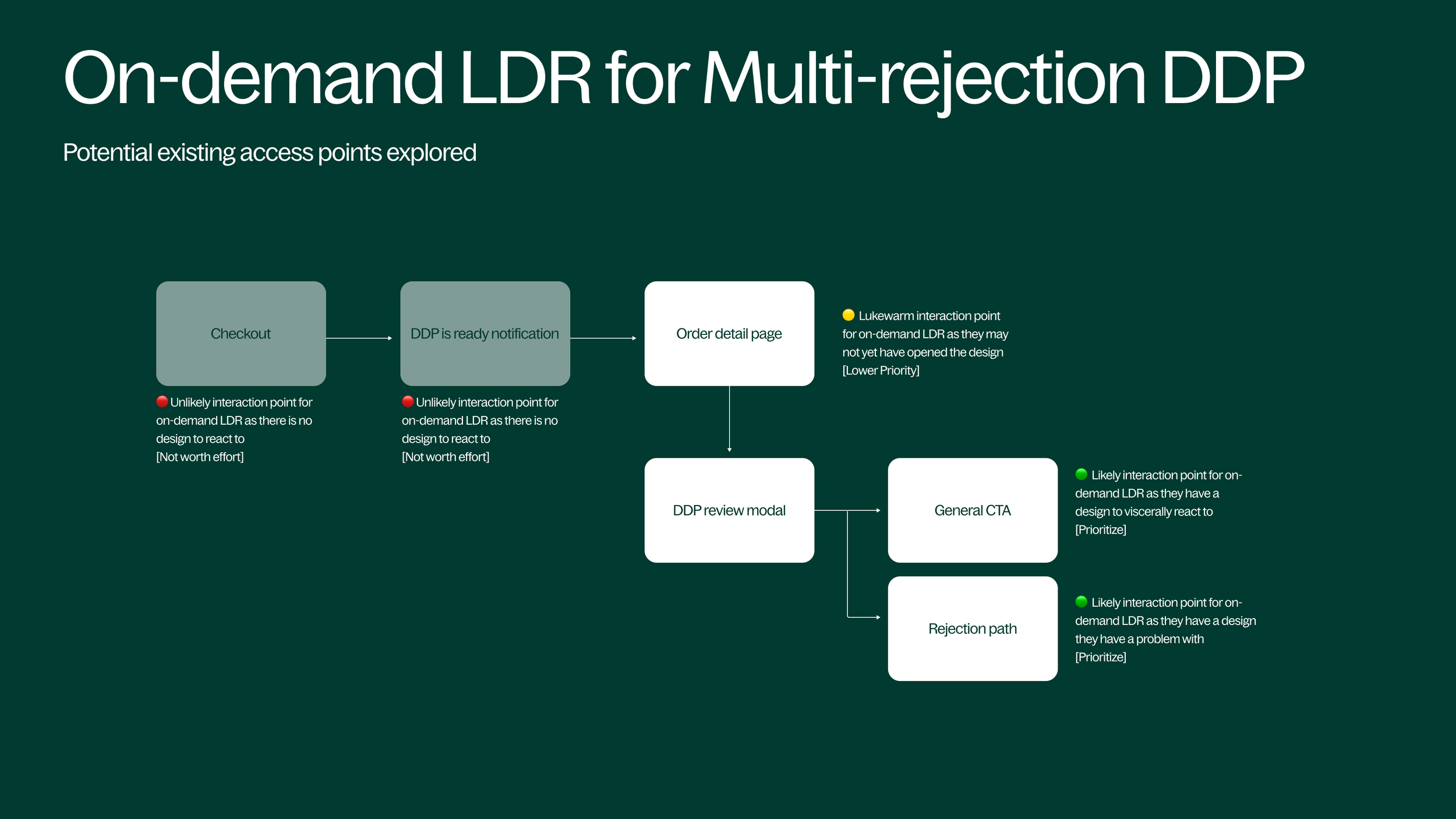
Outcome: Early signals confirmed strong interest. Power users validated that live reviews were a clear differentiator, and we gathered direct feedback that shaped the next phase of development. 50%~ of LDRs were regarding previously rejected designs which led us to refine the UX further to recommend LDRs for multi-rejection cases.
Desired Learnings: Would clinicians actually use this? When and why would they choose live reviews over the self-service method they already knew?
Key Challenges: We had to balance speed (“get something out yesterday”) with usability (“don’t ship something so rough it backfires”). The challenge was aligning on what to build now to spark adoption, versus what to learn for long-term growth.
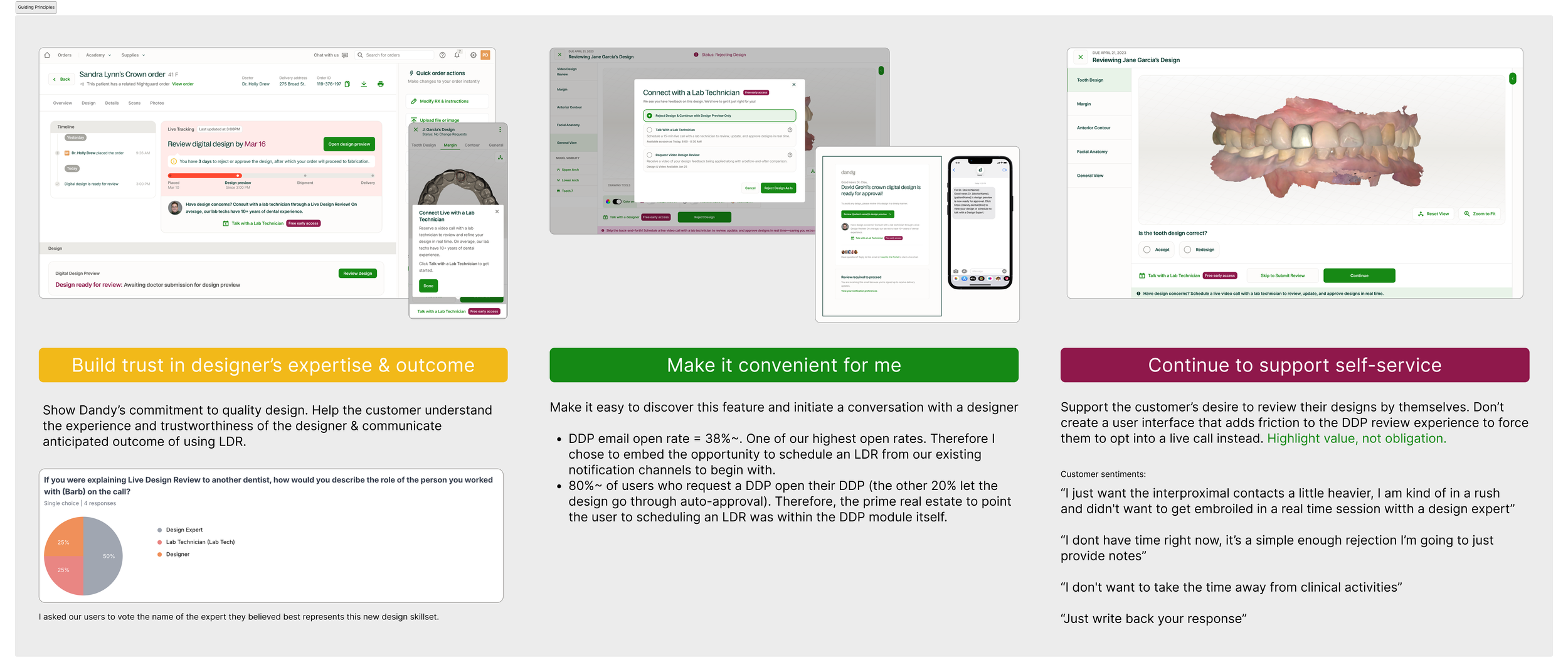
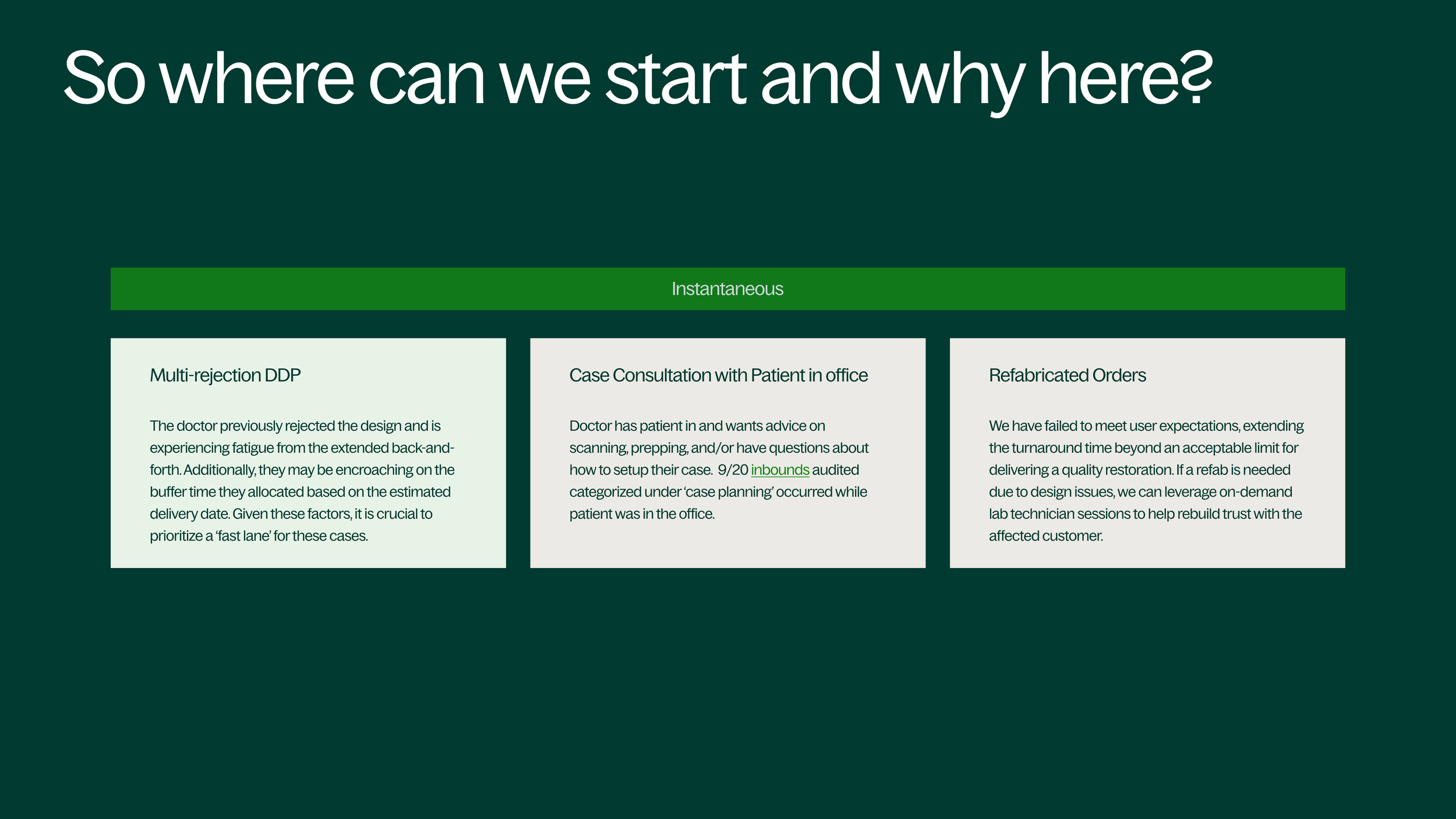
We identified the most viable entry point: embedding live reviews directly at the moment a clinician is reviewing a design. In parallel, we interviewed users to uncover other opportunities. We framed the pilot as “early free access” to give flexibility for future evolution. To minimize risk, we ran smoke tests to gauge interest and appetite before committing to full builds, ensuring low implementation effort but fast paths to learning.
Feature Builds Delivered:
Scheduled Live Design Reviews
Scheduled Case Planning Calls
Smoke Test: VDR
2. Driving Adoption
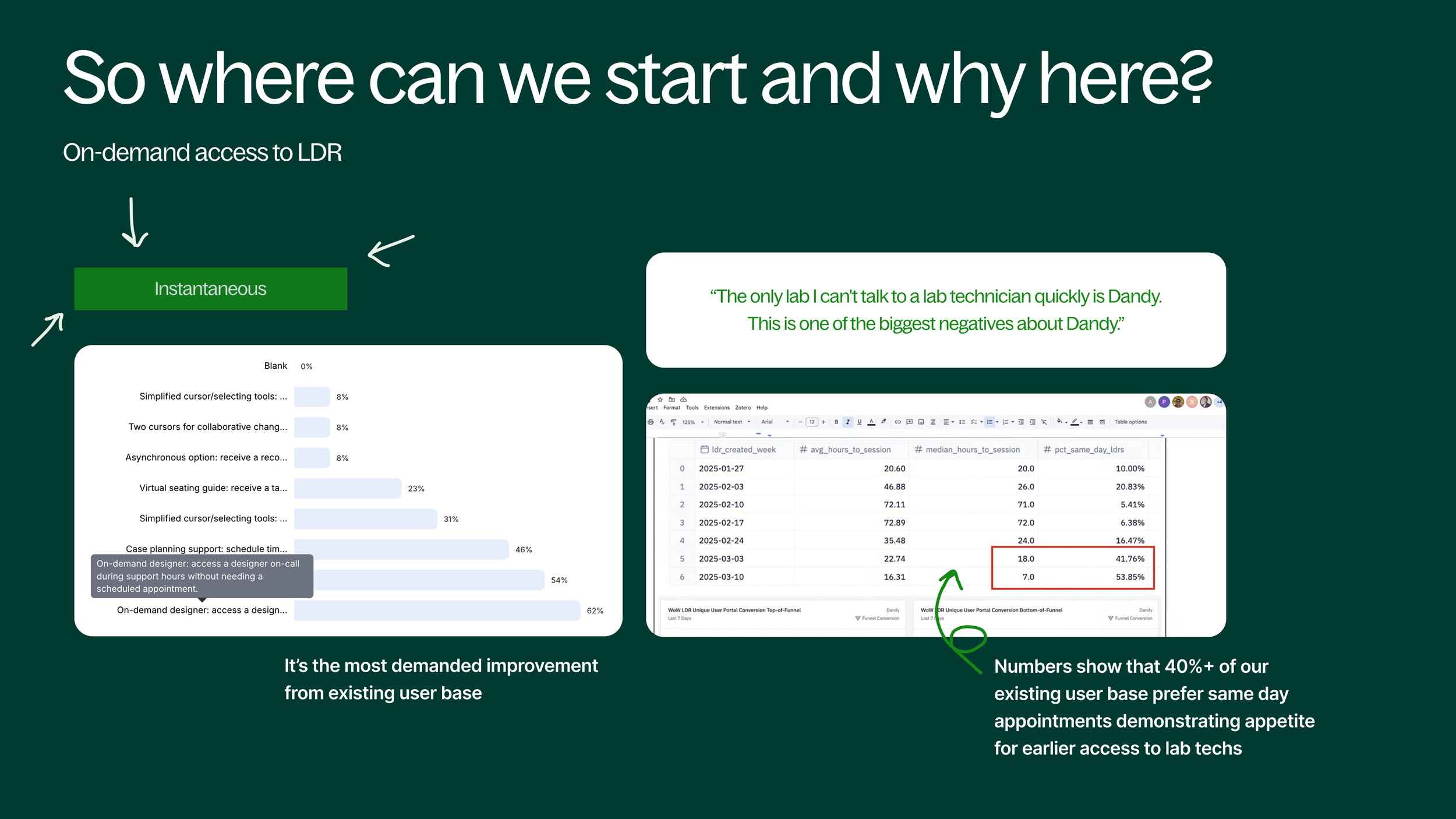
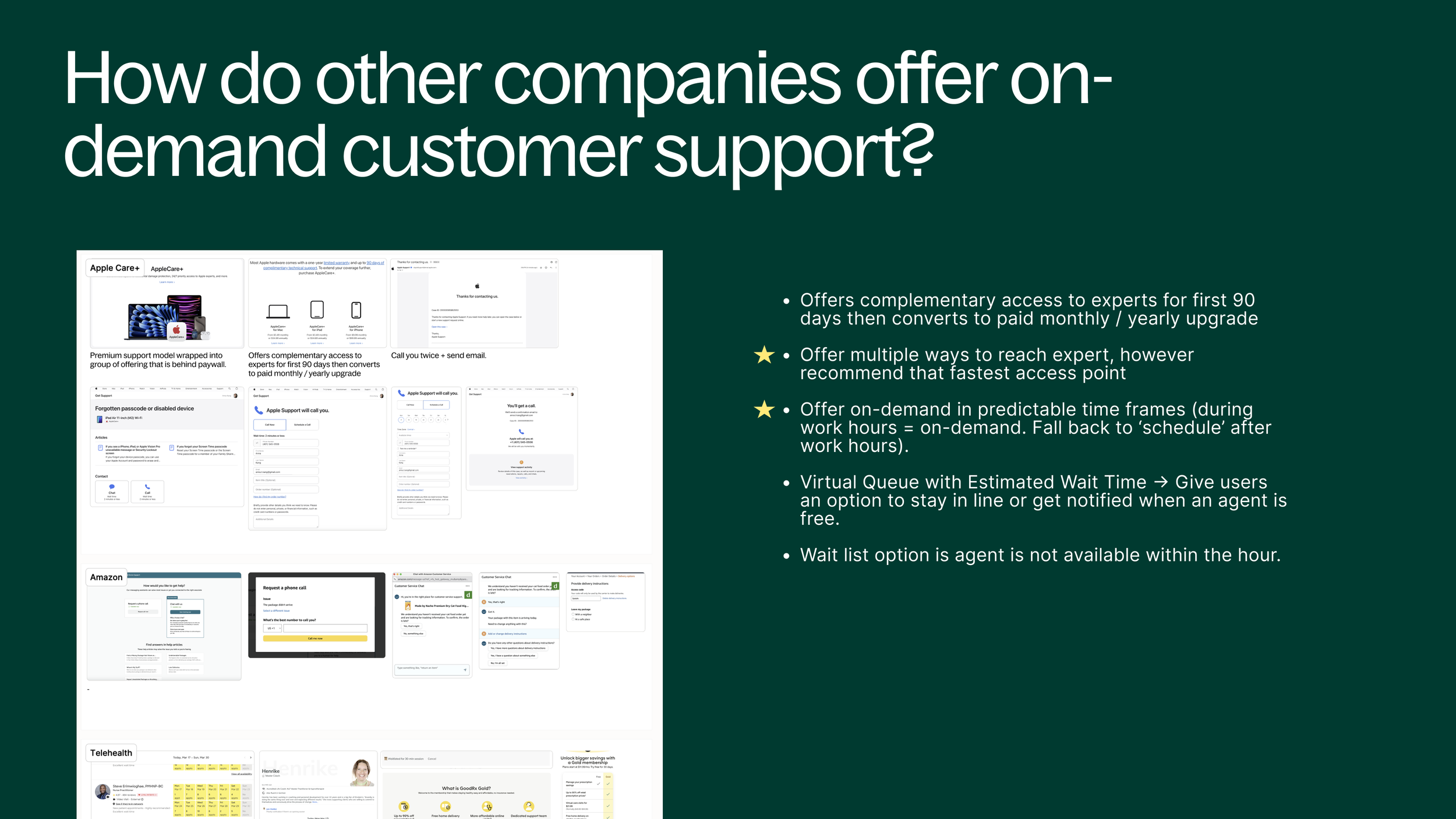
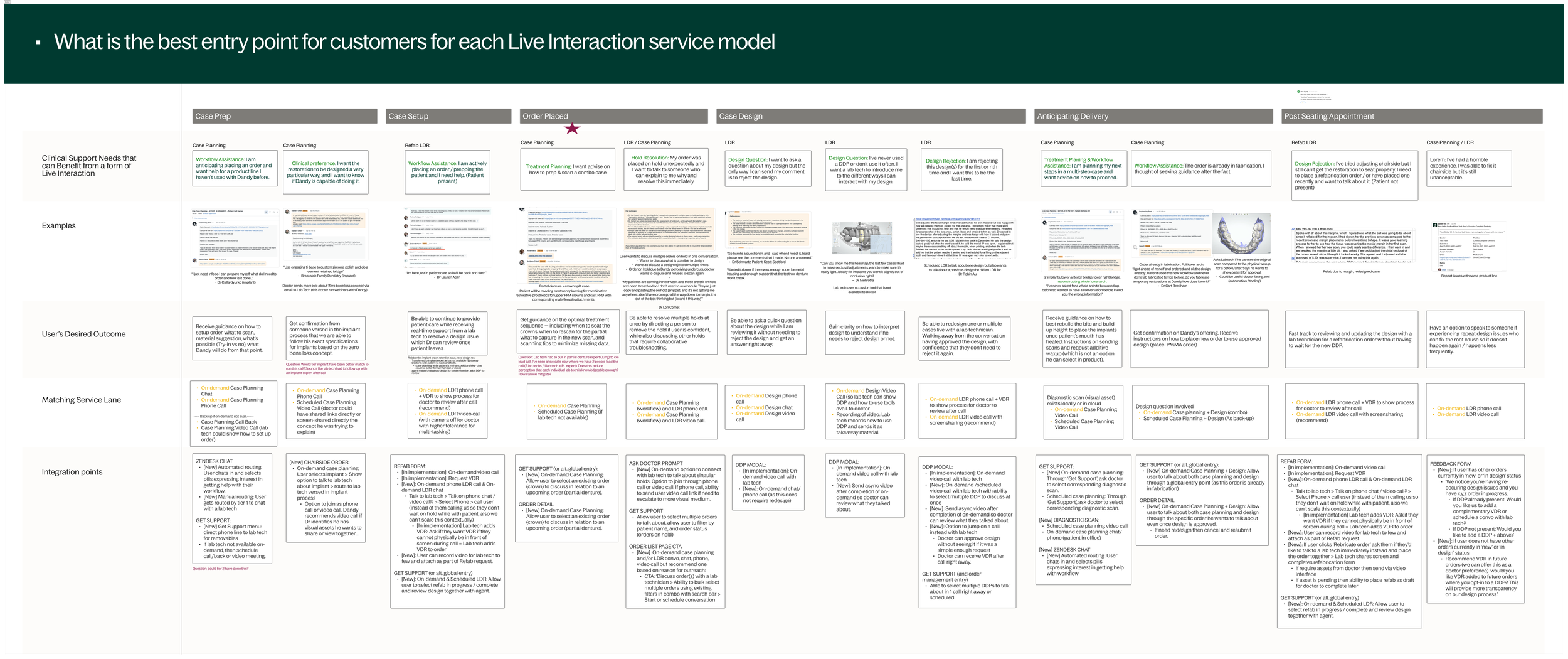
Key Design Decisions: Shifted focus from validating need to removing friction and increasing reach. We explored multiple entry points to make live interactions easier to discover and more flexible; from embedding VDR/LDR into checkout and refabrication orders, to adding an on-demand option for real-time access.
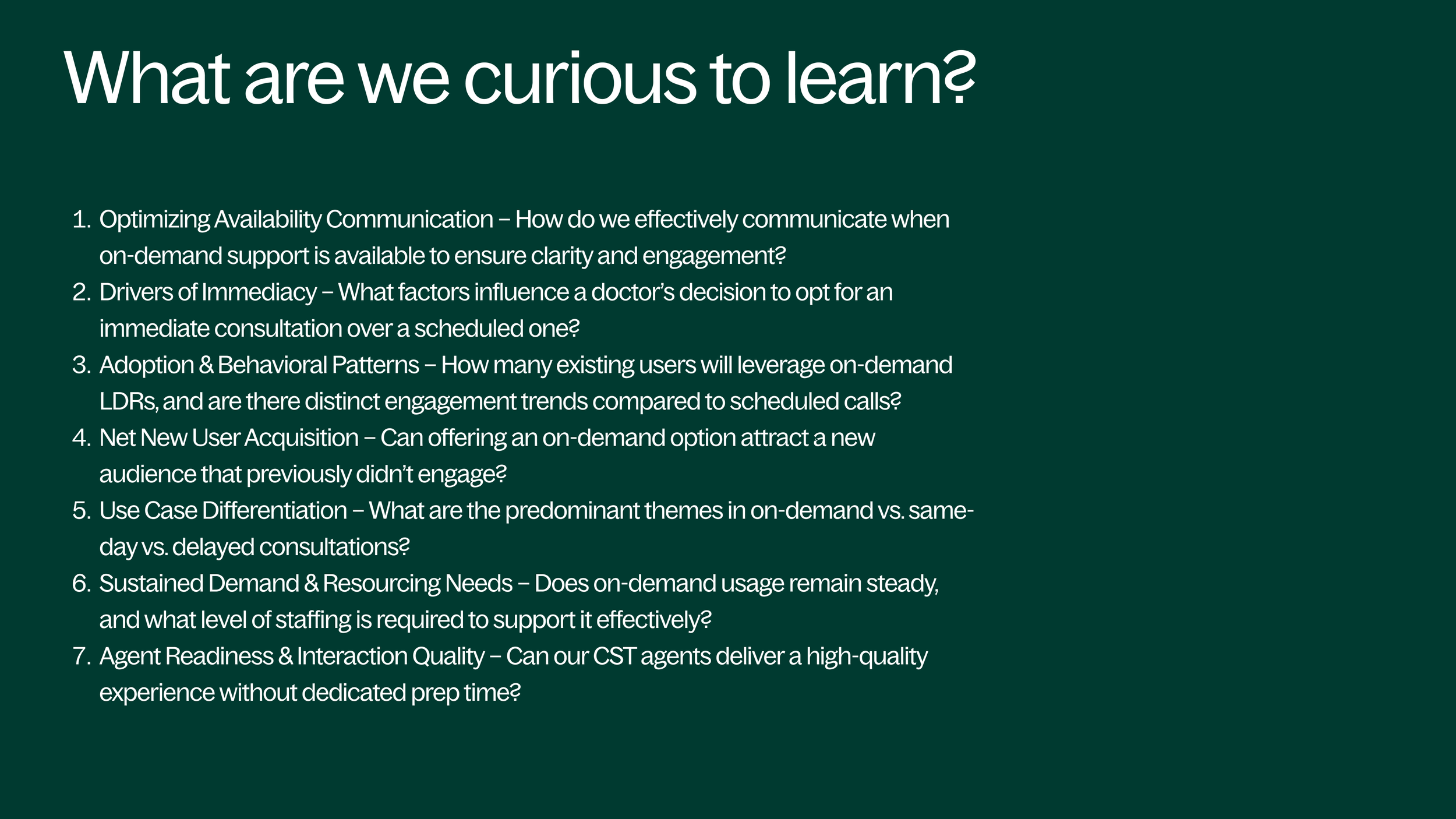
Desired Learnings: Why weren’t more clinicians using live interactions after the pilot proved value? To answer this, we conducted post-session interviews, targeted surveys, and in-product opt-out prompts to quickly capture reasons for non-use. This allowed us to separate issues of discoverability vs. workflow fit vs. UI friction.
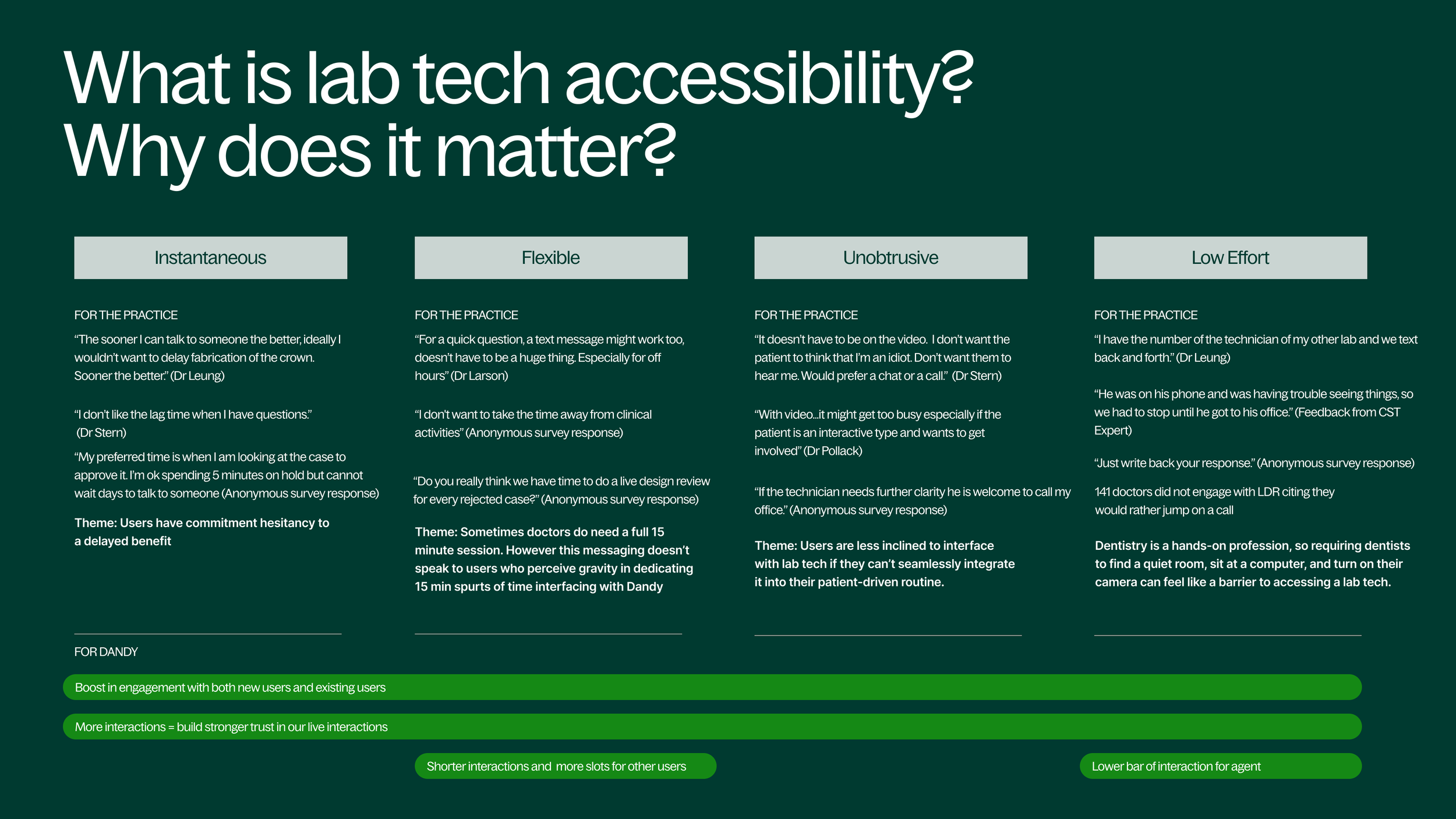
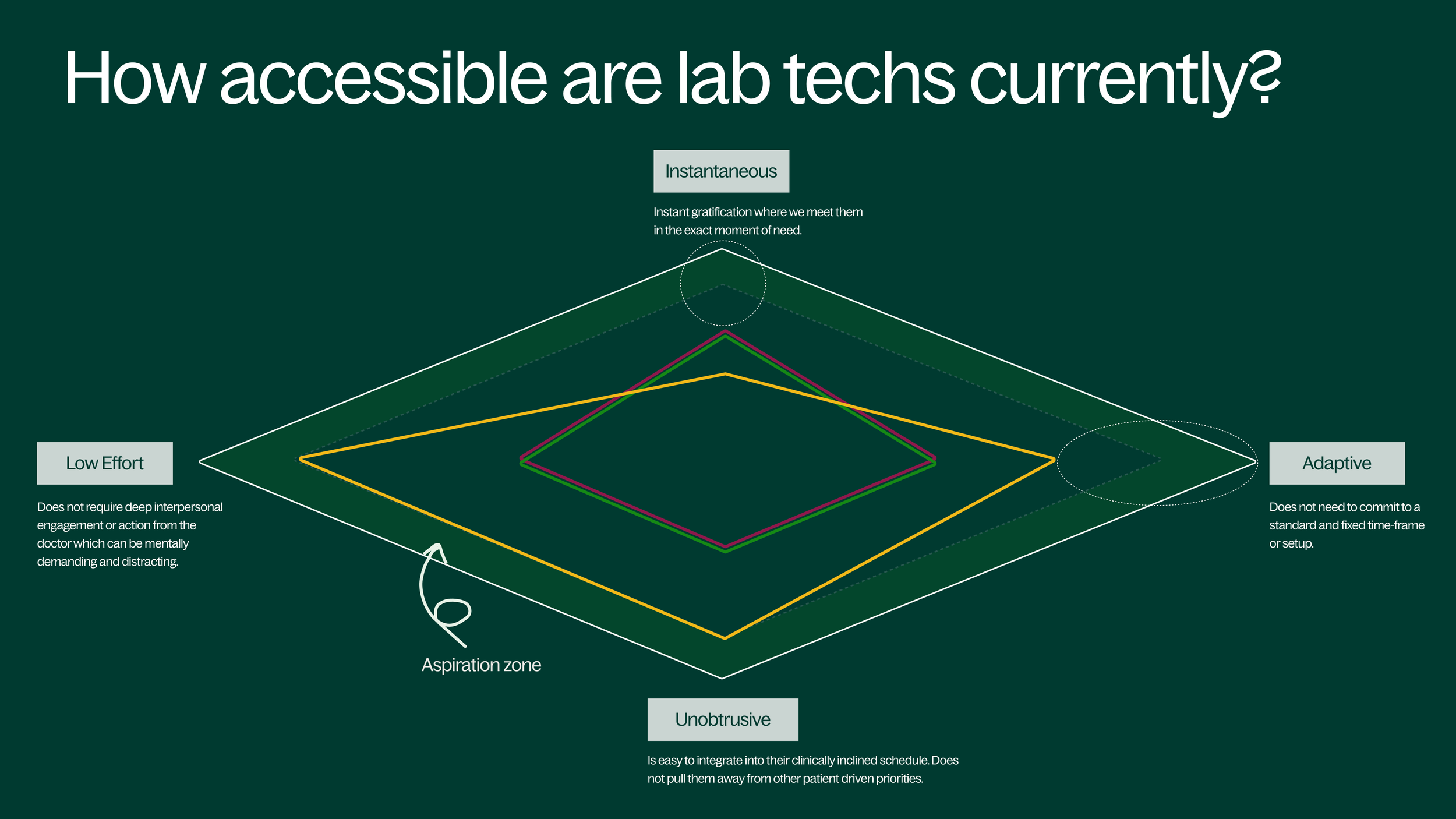
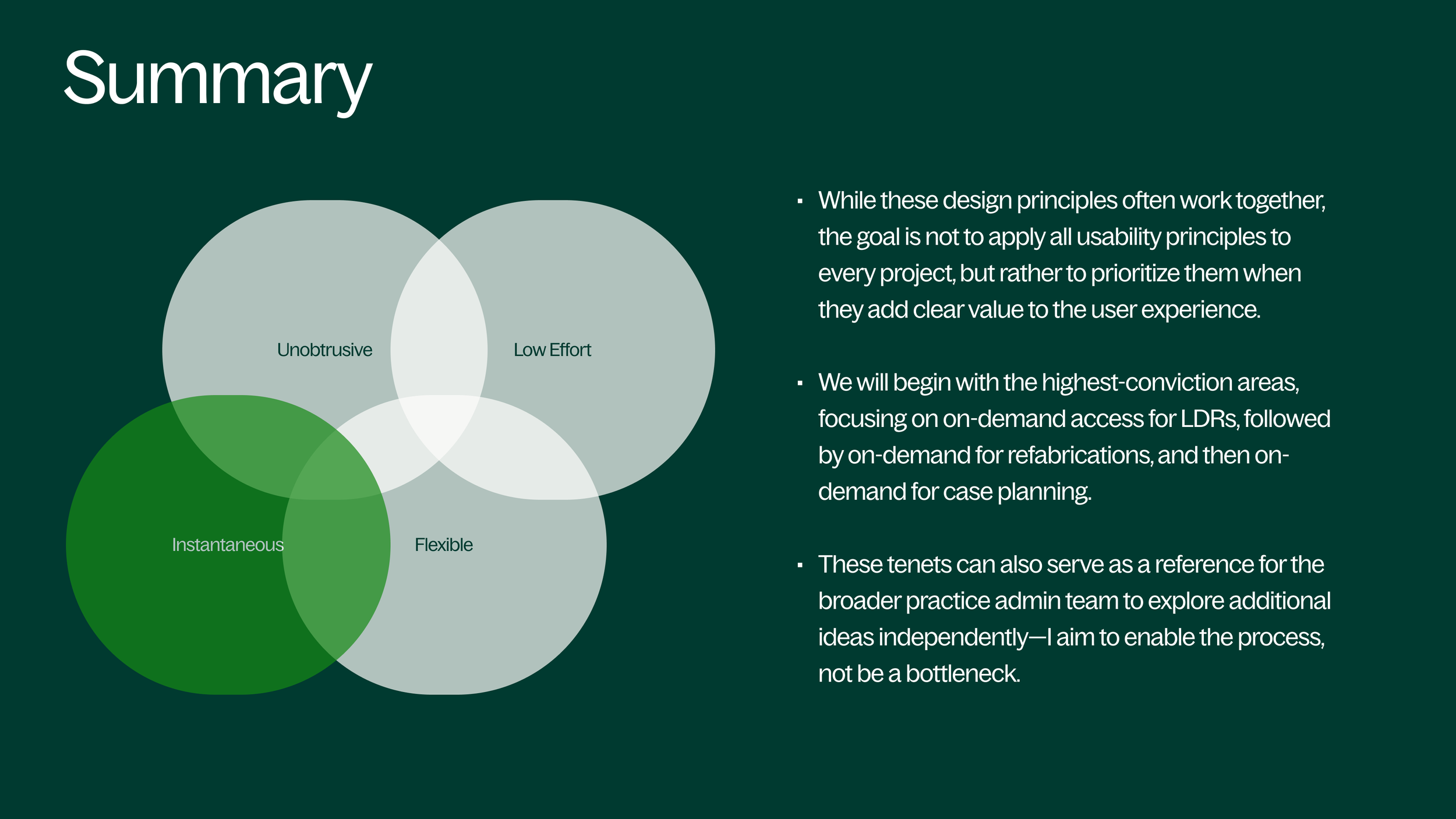
Service Model Mapping
Key Challenges Along the Way
Key Challenges: Leadership pressure often pushed toward surface fixes (“Just make it more visible...add like a giant yellow button”) , while our research showed adoption challenges were deeper. At the same time, team structure created bottlenecks. At one point, I was the only designer supporting 10 engineers and 2 PMs.
How We Overcame Them:
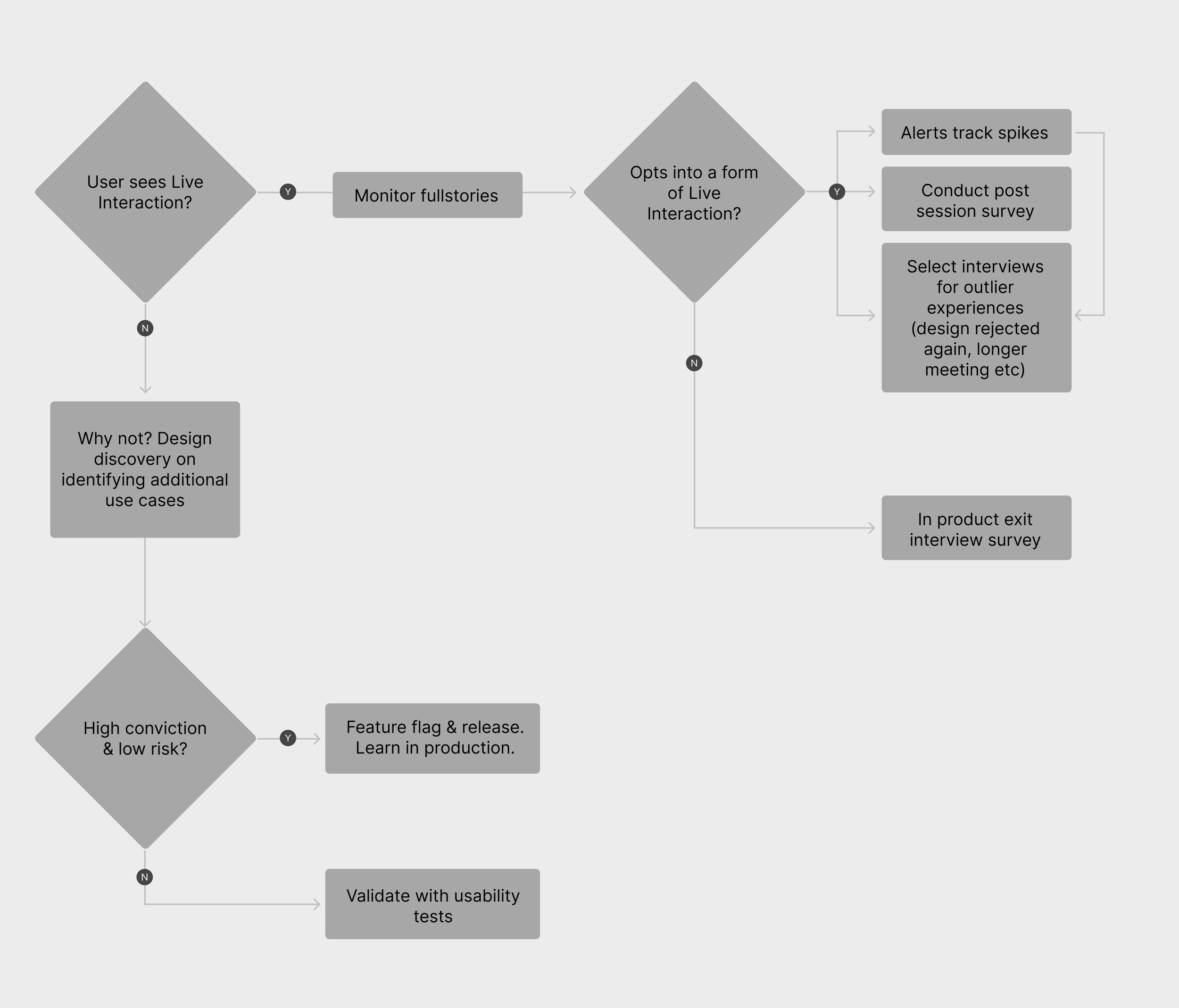
Our team established a lightweight research cadence to continuously validate real adoption blockers.
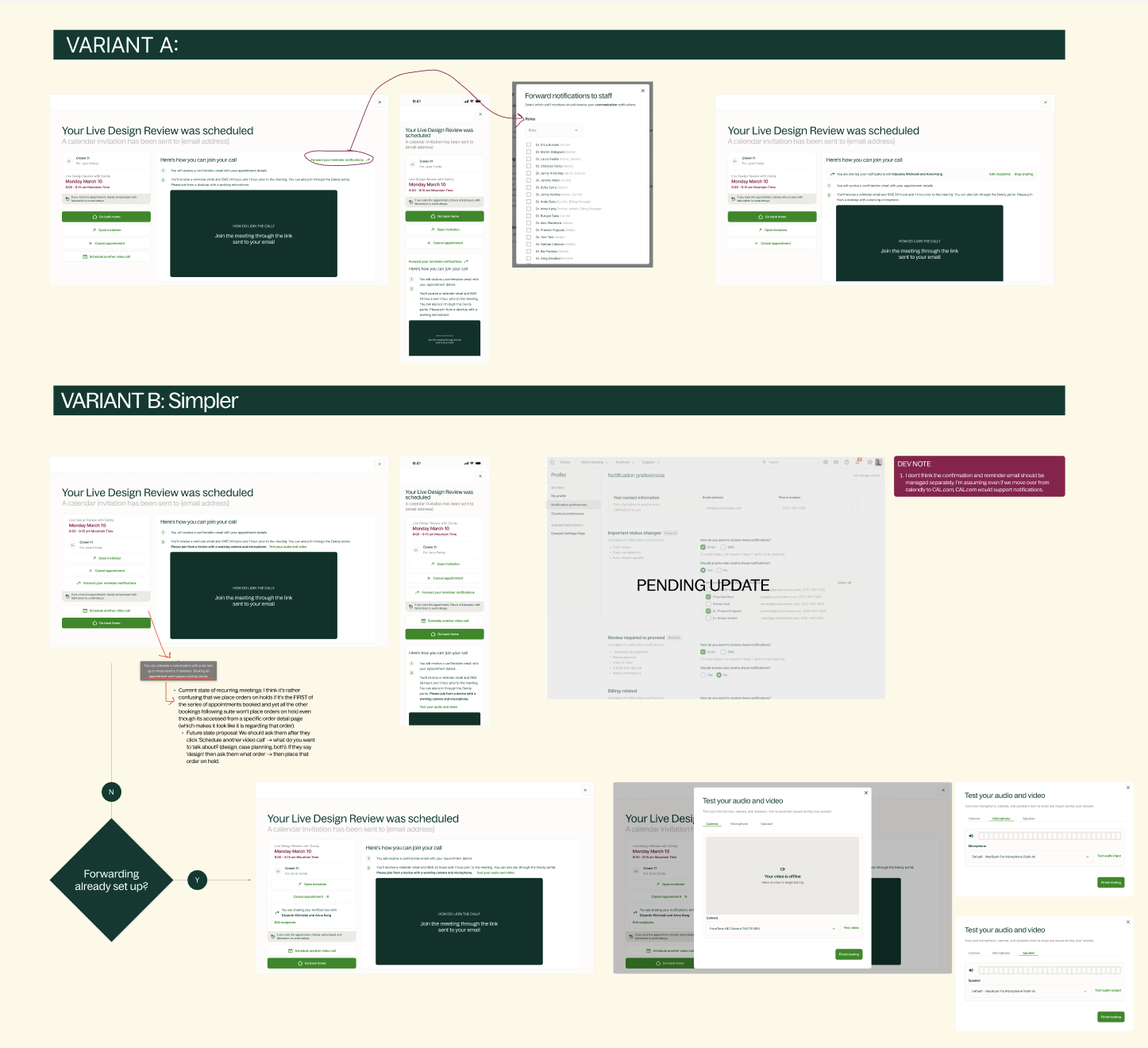
To move faster, we also piloted an engineering-led initiative model where engineers could ship smaller experiments based on quick mockups I provided, while I partnered on higher-level design direction and QA.
Outcomes
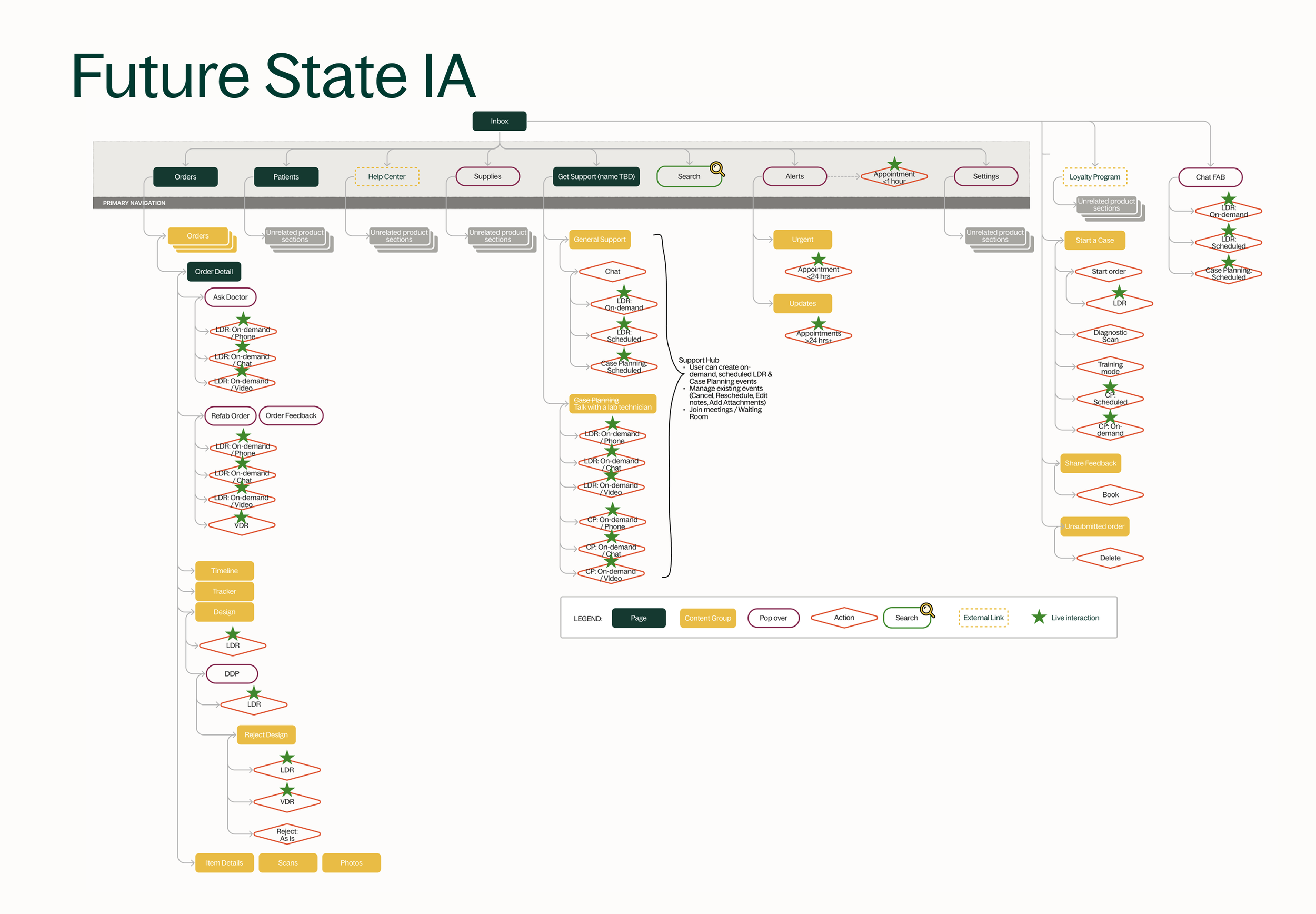
We rolled out an on-demand video call.
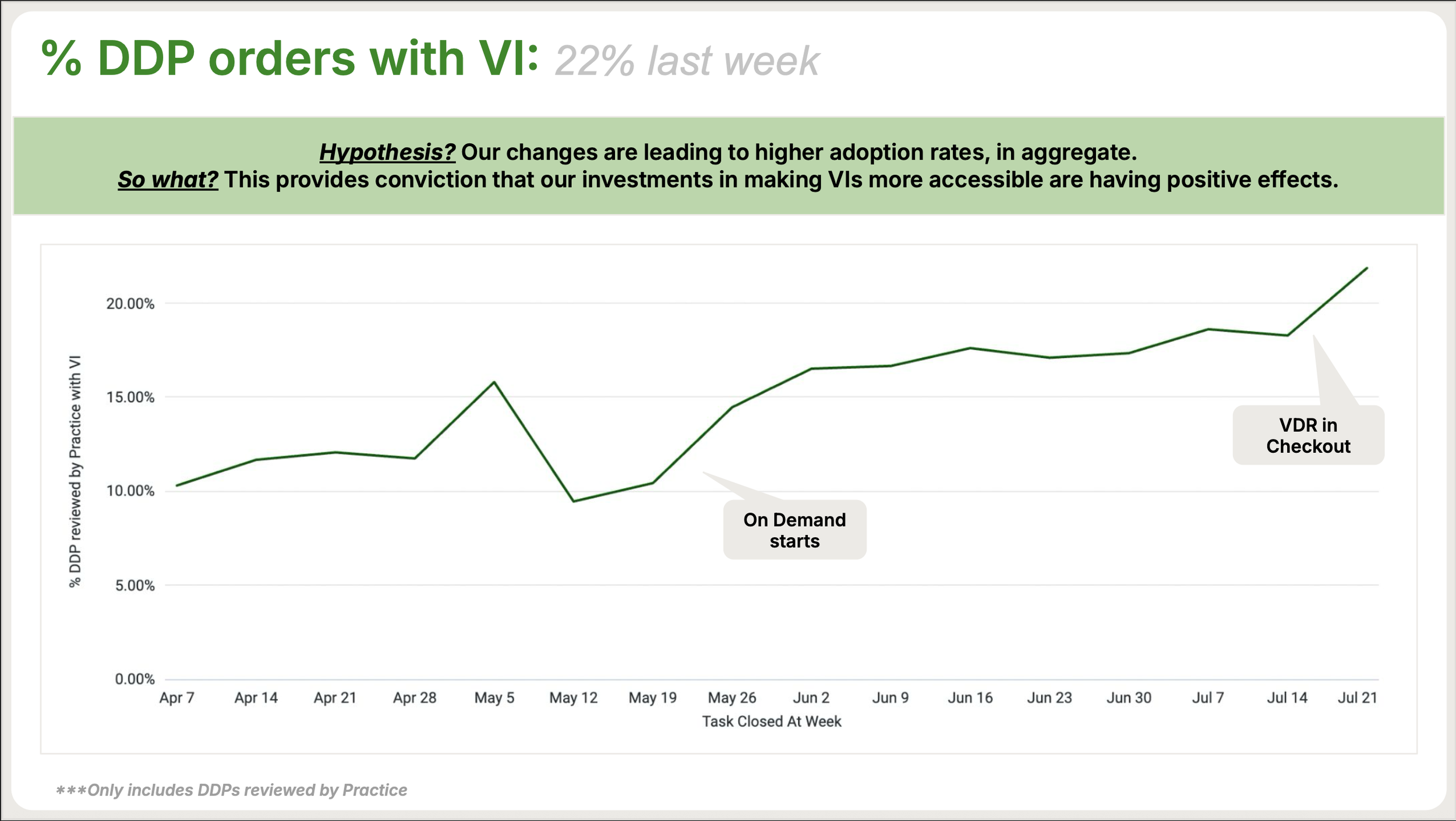
On-demand amongst other feature expansion areas continued to increase weekly interactions
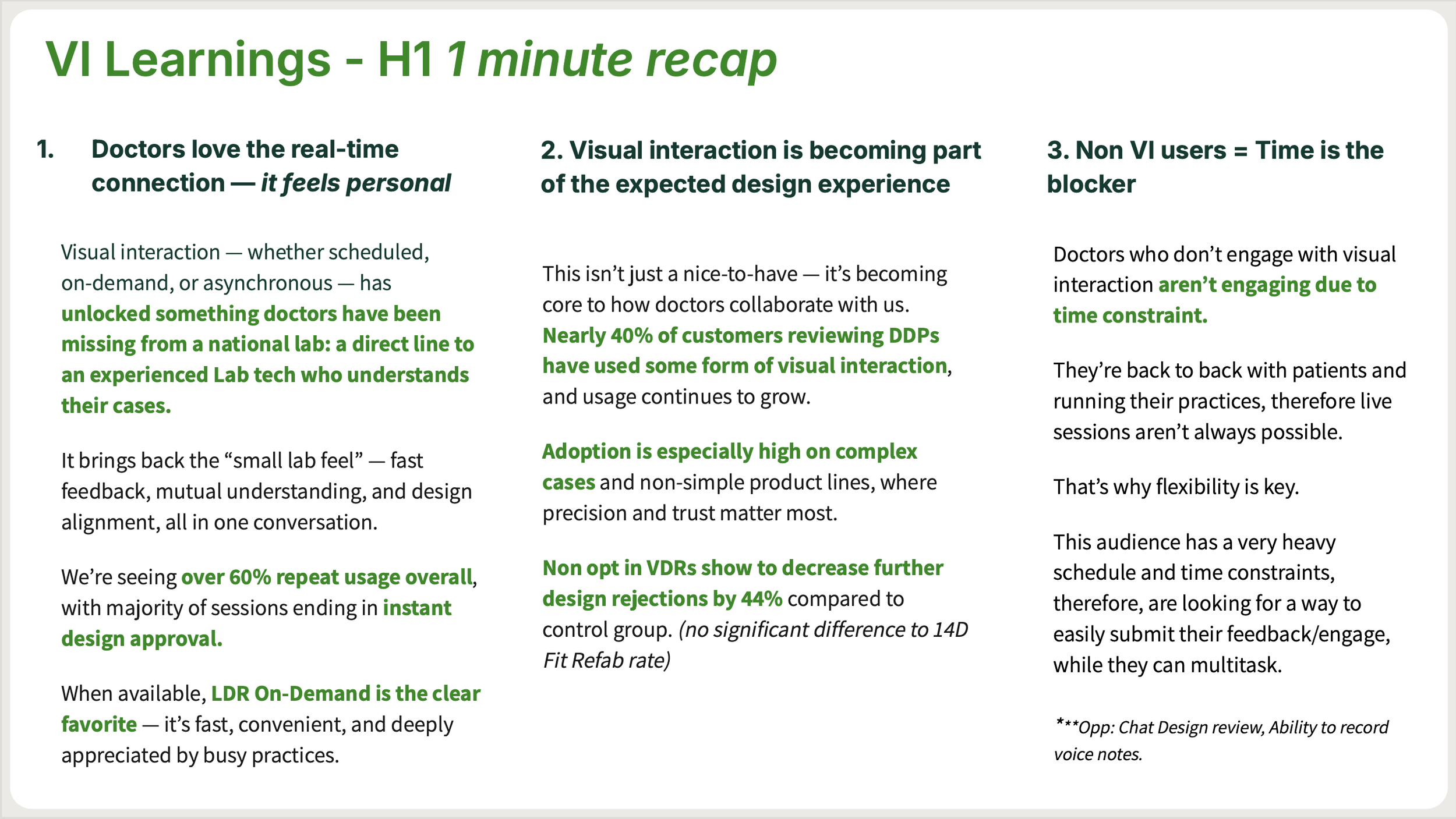
We continued to monitor and report learnings to identify opportunity areas biweekly with leadership.
Summary: We strengthened our understanding of where live interactions delivered the most value, which unlocked higher adoption and more targeted opportunities to position the service.
Feature Builds:
Introduced on-demand option for real-time access | (Prototype embedded above)
Video Design Review (VDR) | View here for prototype recording
Integrated VDR and LDR into checkout and refabrication flows | View here for prototype recording
Designed consolidated global entry point (deferred for later release) | View here for prototype recording
3. Full Collab Suite
Key Design Decisions: Expanded beyond video to introduce new collaboration modalities that met clinicians where they were:
Chat Design Review
Goal: Support quick, asynchronous conversations with lab techs that could escalate into video only if needed: ideal for lightweight confirmations or focused questions without disrupting clinical flow.
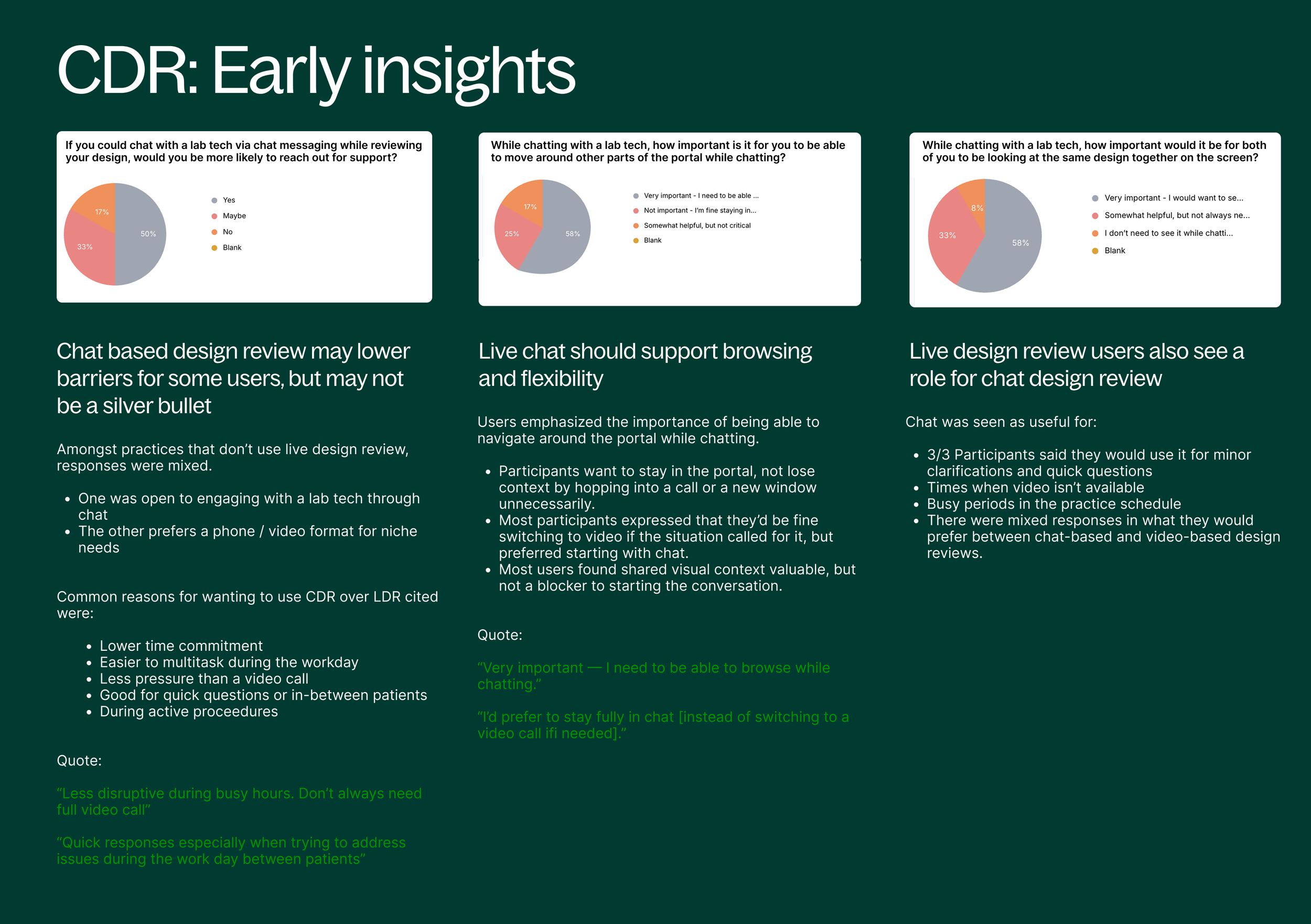
Desired Learnings: Understand how clinicians chose between modalities (chat, video, async) based on context, and measure whether providing choice and flexibility improved adoption, satisfaction, and efficiency.
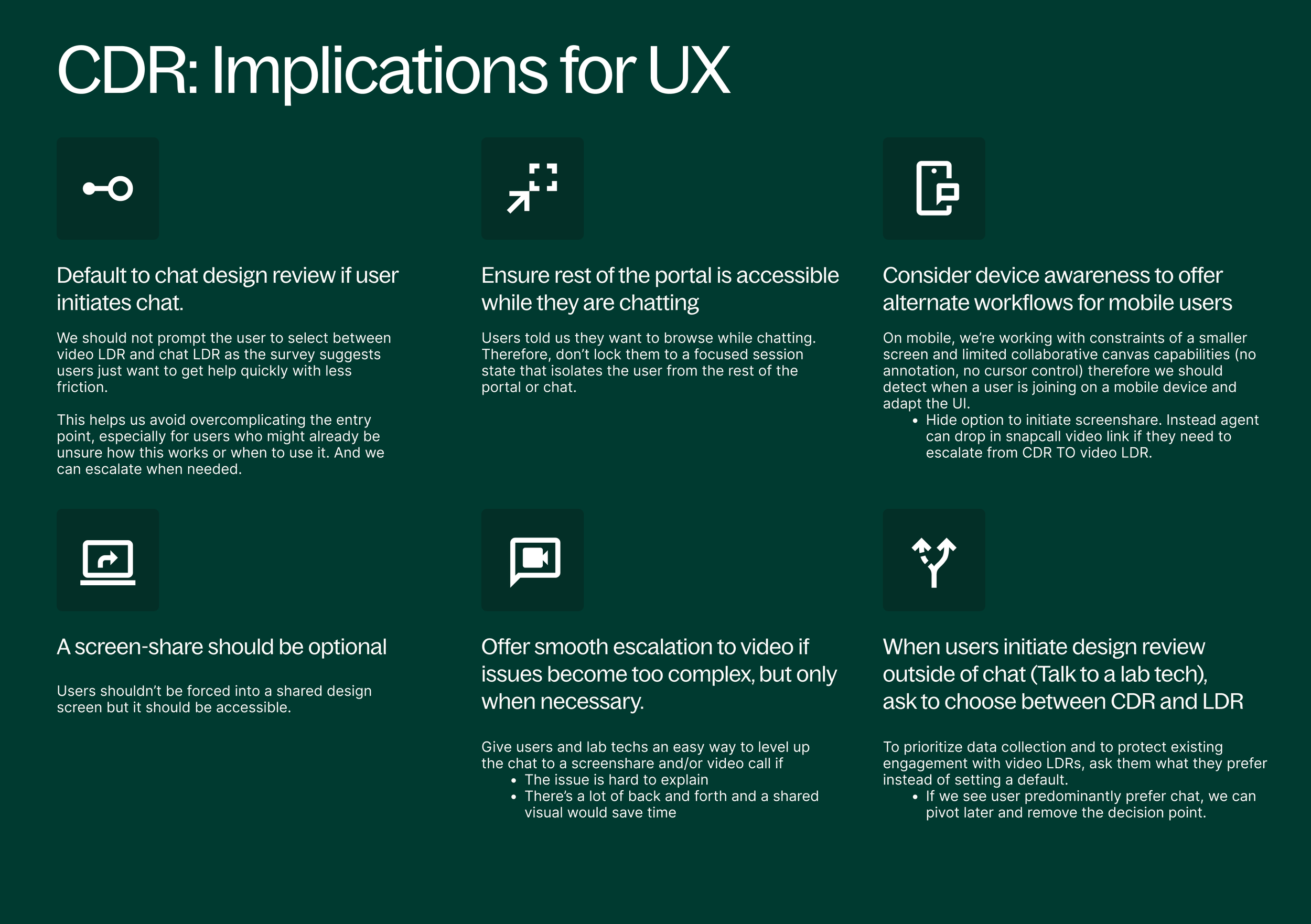
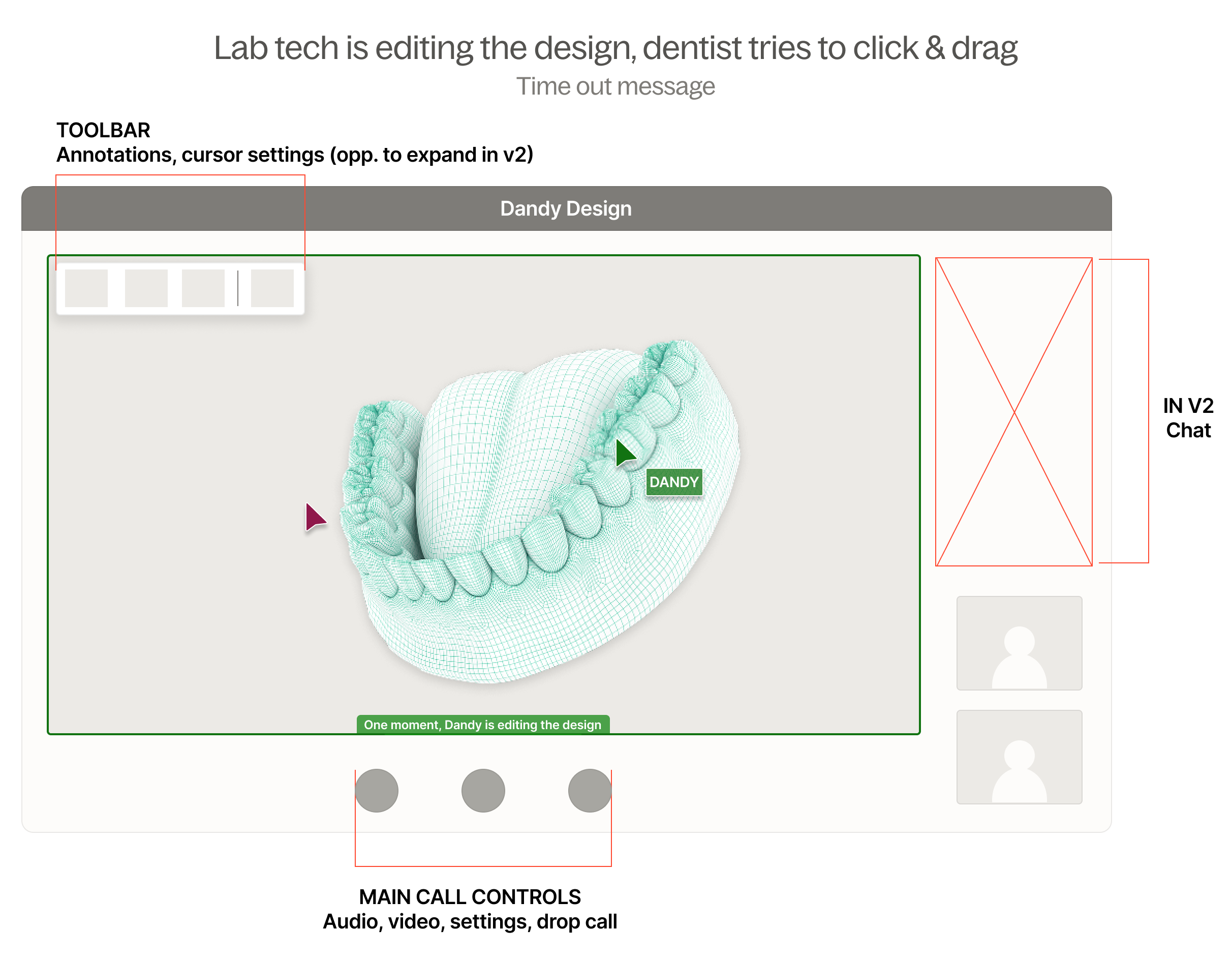
Collaborative Canvas
Goal: Build an in-house real-time collaboration environment combining annotations, shared cursors, and 3D model previews, all embedded with chat and video. This modality empowered clinicians who wanted a richer, hands-on design review experience without relying on clunky screenshare.
MTP In-progress
Key Challenges: With baseline adoption established, leadership looked for gains in interaction quality and efficiency at scale. We needed to prove that offering multiple collaboration options not only supported different user preferences but also streamlined case turnaround.
How We Overcame Them: Partnered with customer support leadership and lab techs to co-design workflows where each modality had a clear purpose. For example, enabling lab techs to redesign cases directly in checkout streamlined handoffs, while Collaborative Canvas created space for in-depth multi-case reviews.